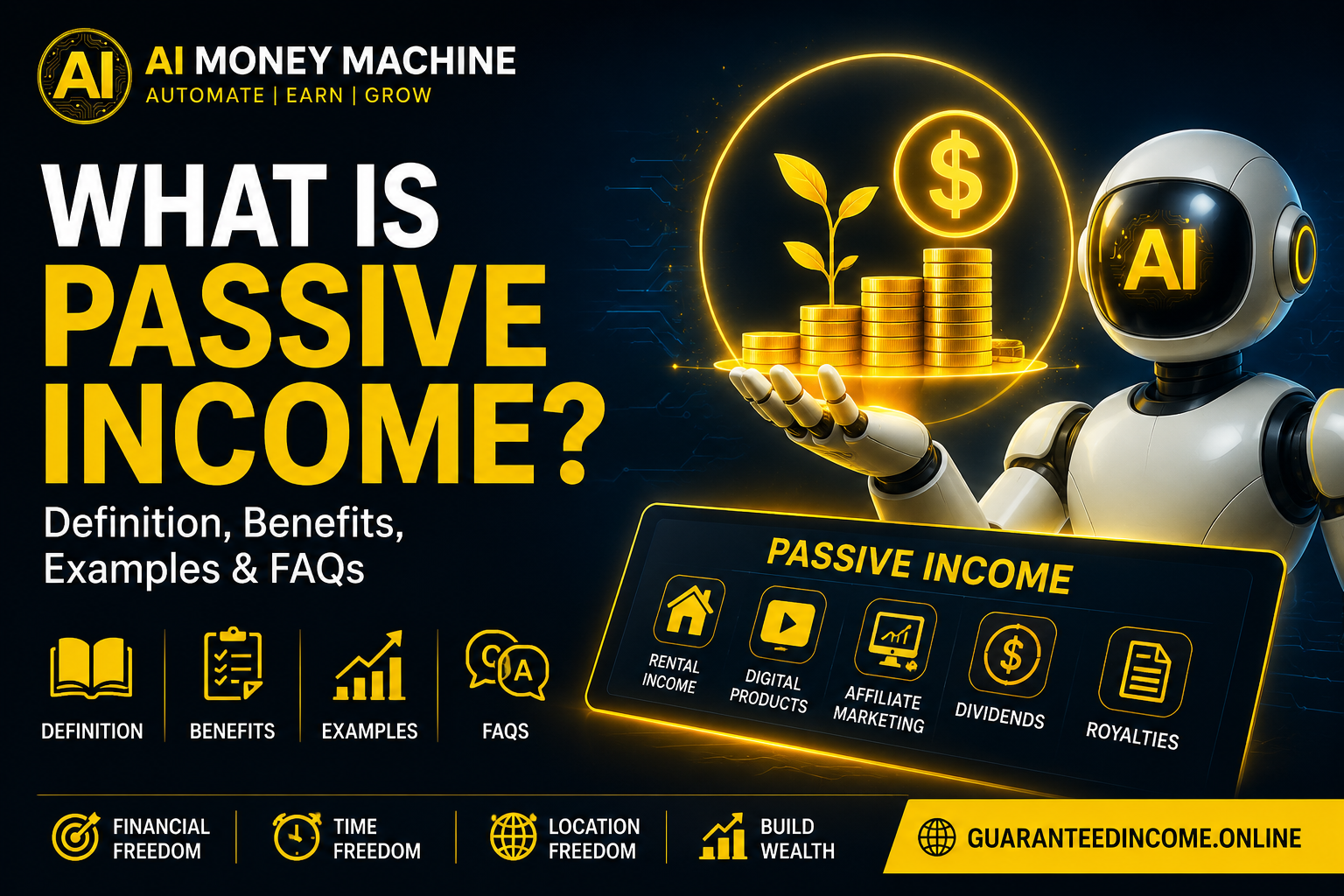
What Is Passive Income. Definition
Passive income is money earned from activities, assets, or systems that continue generating revenue with limited ongoing effort. Unlike traditional employment, where income is directly tied to the hours you work, passive income can continue flowing even when you’re not actively working.
Many people pursue passive income to create financial security, build wealth, and gain greater freedom over their time.
While passive income often requires an initial investment of time, money, or effort, the goal is to establish systems that can generate income consistently over the long term.
How Does Passive Income Work?
Passive income works by creating assets or systems that produce recurring revenue. These assets can include online businesses, affiliate marketing systems, digital products, investments, rental properties, and automated income platforms.
Instead of exchanging time for money every day, passive income allows your assets to continue working for you.
Examples include:
-
Automated online business systems
-
Affiliate marketing commissions
-
Dividend-paying investments
-
Rental property income
-
Digital products and courses
-
Membership websites
-
Recurring subscription services
Benefits of Passive Income
Financial Freedom
Passive income can help reduce dependence on a traditional job and provide greater financial flexibility.
Multiple Income Streams
Many successful entrepreneurs build several passive income streams to increase stability and reduce financial risk.
Time Flexibility
Unlike conventional employment, passive income systems can continue generating revenue while you focus on other priorities.
Scalability
Many online passive income models can grow without requiring a proportional increase in time or effort.
Long-Term Wealth Building
Consistent passive income can support long-term financial goals such as retirement, investing, and wealth accumulation.
Examples of Passive Income
Affiliate Marketing
Affiliate marketers earn commissions by promoting products and services online. Once content and marketing systems are established, commissions can continue to generate over time.
Automated Online Businesses
Automated business systems use sales funnels, marketing automation, and recurring commissions to generate income with minimal daily management.
Digital Products
E-books, templates, software, and online courses can continue generating revenue long after they are created.
Dividend Investments
Investors can receive regular dividend payments from stocks and funds that distribute profits to shareholders.
Rental Income
Property owners may earn recurring income through residential or commercial rentals.
Membership Programs
Subscription-based services generate recurring monthly income from active members.
Is Passive Income Truly Passive?
Many people assume passive income requires no effort. In reality, most passive income opportunities require initial work, setup, learning, and occasional maintenance.
The most successful passive income earners typically invest time upfront to build systems that can later operate more efficiently.
The goal is not necessarily zero work, but rather creating income streams that are less dependent on your daily time and effort.
Frequently Asked Questions
What is the best passive income stream for beginners?
Affiliate marketing, digital products, and automated online business systems are often considered accessible starting points because they typically require lower upfront investment than many traditional businesses.
How much money do I need to start earning passive income?
The amount varies depending on the opportunity. Some online business models can be started with a relatively small investment, while others may require more substantial capital.
Can passive income replace a full-time job?
Some individuals successfully build passive income streams that exceed traditional employment income. However, results vary, and success depends on factors such as effort, strategy, market conditions, and consistency.
How long does it take to generate passive income?
The timeline varies widely. Some income streams may begin generating revenue within weeks, while others may take months or years to develop.
Is passive income taxable?
In many countries, passive income is subject to taxation. Consult a qualified tax professional regarding regulations in your jurisdiction.
What are the risks of passive income?
Potential risks include market changes, business competition, economic conditions, and the possibility that income may fluctuate over time.
Can passive income help with early retirement?
Many people use passive income strategies to supplement retirement savings and work toward financial independence.
Related Resources
-
Can an Automated Money Machine Replace a Full-Time Income?
-
How Automated Income Systems Work
-
Financial Freedom Roadmap for Beginners
-
Automated Income vs Traditional Employment
-
Building Multiple Streams of Income
-
How Recurring Commissions Create Long-Term Wealth
-
Beginner’s Guide to Online Income Systems
-
What Is Financial Freedom?
-
How Affiliate Marketing Works
-
Best Passive Income Strategies for 2026

Leave a Reply